
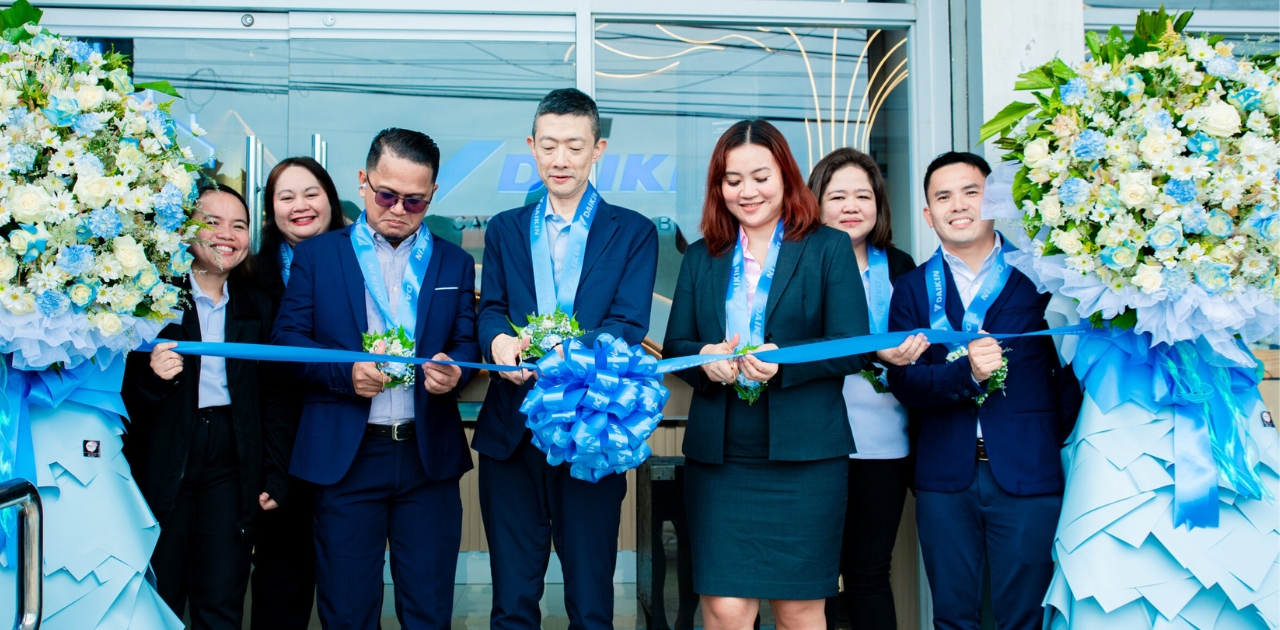
Opening your company’s new office or branch is the kind of milestone that looks effortless in photos, yet chaotic behind the scenes. Anyone who has actually planned one knows that cutting the ribbon is the easy part. The months and weeks leading up to it are where everything either comes together or falls apart.
In the Philippines, an opening day carries more weight than a typical business formality. There’s the blessing, the ribbon-cutting, the symbolic first transaction, and the gathering of clients, partners, and community. For many businesses, it’s also a public signal that you’ve arrived and you’re here to stay. That’s why it deserves more thought than a quick logistics checklist.
This guide walks through what to prepare when you’re opening an office or a new branch in the Philippines, from the paperwork most owners forget to schedule early, to the program flow that keeps the day running, to the documentation that turns one afternoon into months of usable content.
Start Planning Ahead
The biggest mistake is treating an opening like a regular workday which isn’t. There are too many moving parts and too many people involved to leave anything to the last minute.
Give yourself enough time to think through the details, confirm vendors, run through the program at least once, and handle small problems before they become big ones. The day itself moves fast. The preparation is what makes it look easy.
Handle the Permits and Paperwork Early
Before you can legally open, several permits need to be in place. Skipping or delaying any of these can push back your opening date or create complications on the day itself.
Start with your business registration. Sole proprietors register their business name with the Department of Trade and Industry (DTI), while corporations and partnerships register with the Securities and Exchange Commission (SEC). Once that’s done, register with the Bureau of Internal Revenue (BIR) for your Tax Identification Number, official receipts, and books of accounts. The BIR Certificate of Registration and the “Ask for Receipt” Notice (ARN) both have to be displayed at your place of business.
Next is your local government unit (LGU). Most Philippine LGUs require a business permit or mayor’s permit, a barangay clearance, and a sanitary or occupancy permit depending on the business. Each LGU has its own forms, fees, and processing schedules, so checking your city or municipality’s official guidelines is the safest move. In Cagayan de Oro, for example, business permit applications go through the BOSS Office (Business One Stop Shop) at City Hall, where documents like DTI or SEC registration, lease contracts, occupancy permits, and fire safety certificates are submitted in one place.
Fire safety is another non-negotiable. The Fire Safety Inspection Certificate (FSIC) is required under Republic Act No. 9514 (The Fire Code of the Philippines) and is issued by the Bureau of Fire Protection. It’s a mandatory attachment for getting or renewing your business permit. In many areas, the BFP now accepts applications online through its Fire Safety Inspection System.
If you’re opening in a newly constructed or renovated space, you’ll also need a building permit and occupancy permit before you can hold any event on the premises.
The simplest way to avoid delays is to start applications early and verify current requirements with each agency directly. Treating these as part of your opening timeline, not as last-minute errands, is what keeps the day from turning into a scramble.
NOTE: Requirements, fees, and procedures vary by city and municipality and may change over time. For accurate and updated information specific to your area, please coordinate directly with your local government unit (LGU) or the relevant government office.
Plan the program flow
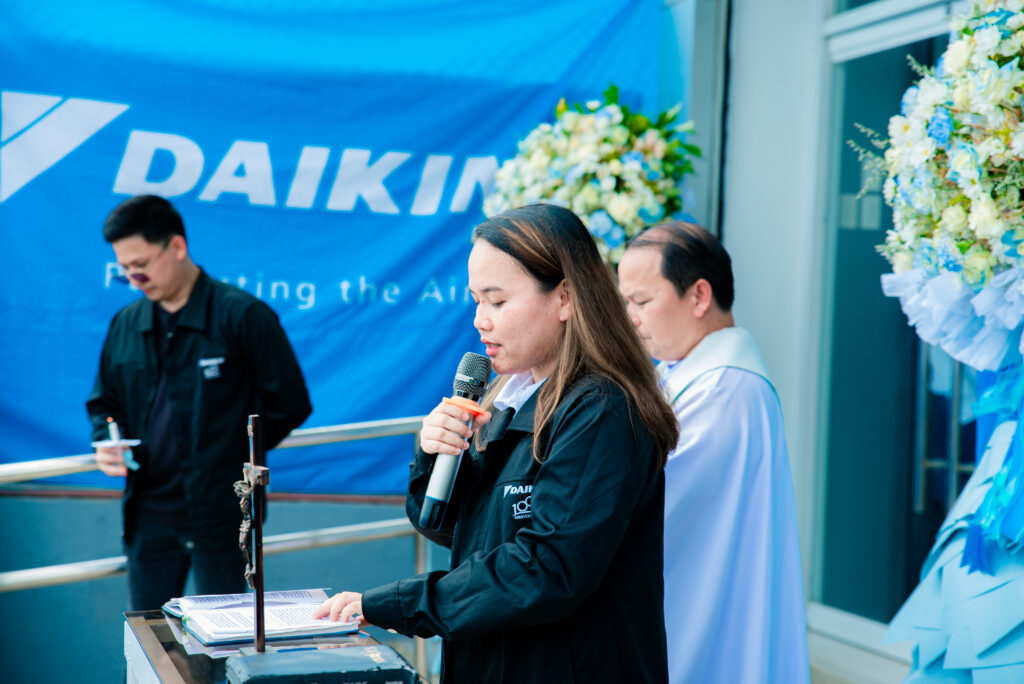
A clear program keeps the event from dragging or feeling chaotic. Most Filipino office and branch openings follow a recognizable structure, but the order and pacing matter more than people think. Without a flow, the day either rushes through the meaningful parts or stalls between them.
A typical program looks something like this:
- Registration and arrival of guests
- Opening prayer or invocation
- Welcome remarks from leadership
- Mass or blessing ceremony
- Ribbon cutting
- Symbolic first act (first transaction, first call, unveiling, or similar)
- Message from key stakeholders or partners
- Photo opportunity with guests and team
- Fellowship, refreshments, or tour of the space
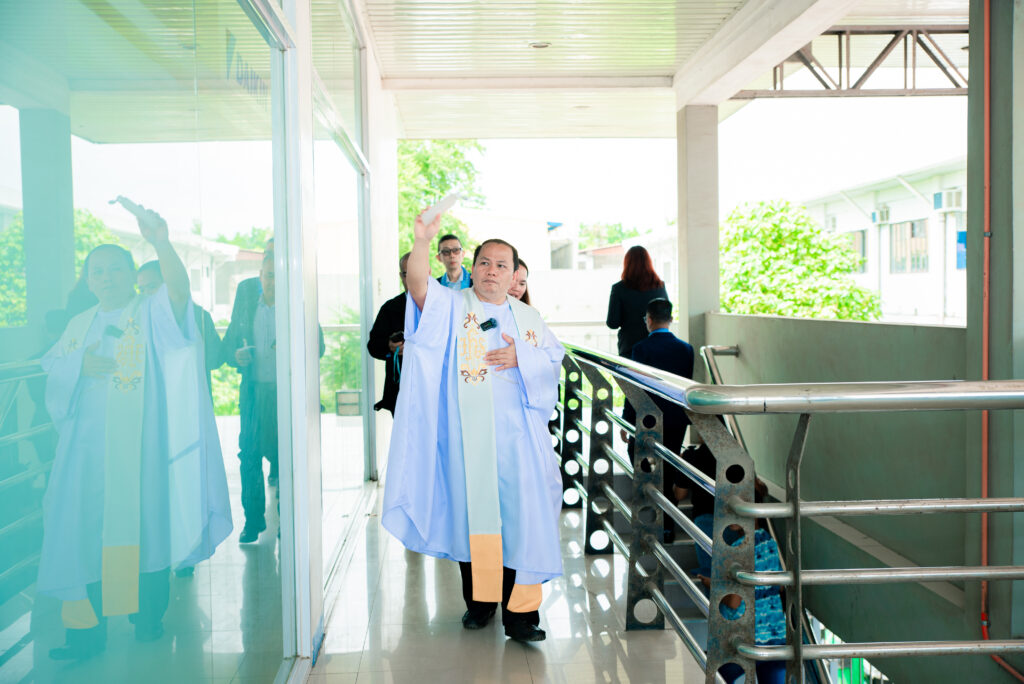
The blessing is usually the heart of the event. Filipino business openings often blend Catholic rituals with other cultural practices, with priests offering holy water blessings alongside elements like feng shui symbols or traditions believed to attract prosperity. Coordinate with your priest, pastor, or officiant early, so they’re briefed on the program and timing.
Plan your ribbon cutting with the right people. Decide ahead of time who will hold the ribbon, who will cut it, and where everyone will stand. This isn’t trivial as bad positioning results to awkward photos and can leave key guests feeling sidelined.
Next, assign someone to run the program. The day moves fast, so people need cues. An emcee or program host keeps things on schedule, makes introductions, and bridges between segments. Don’t leave this to chance or pass it off to whoever happens to be free.
Keep the formal portion tight. After the program ends, transition to a fellowship so guests can mingle, take photos, and explore the new space.
Send invitations strategically
Who you invite shapes the energy of the day. A thoughtful guest list balances people who matter to the business, who add credibility, and who you genuinely want to celebrate with.
Consider the following:
- Clients and key business partners
- Suppliers and contractors who helped you get here
- Local government officials like the barangay captain or city representative
- Media or press if you want media coverage
- Head office representatives or franchise leaders, for branch openings
- Industry peers or community figures
- Your team and their families
Send invitations early enough that people can adjust their schedules. For government officials and formal partners, printed invitations are appropriate. For everyone else, digital invitations through email, Viber, or Messenger usually work fine. Match the format to the level of formality your business wants to project.
Include the essentials such as the date, time, exact location with a map or QR code, program highlights, dress code if any, and RSVP details.
Lastly, follow up to confirm attendance before the event. A short message helps you finalize the headcount for the food, seating, and souvenirs if you’re giving any. It also surfaces last-minute conflicts early.
Prepare the space for the big day
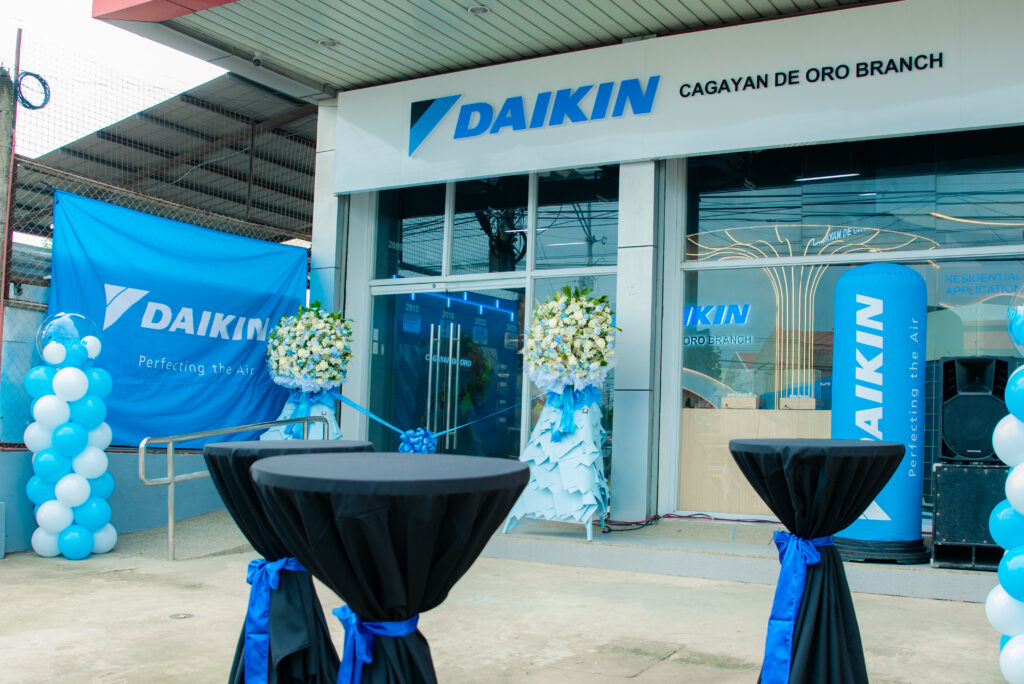
The venue should be ready the moment guests walk in. That means everything from signage to seating needs to be set up before the day of the event, not in the hour before guests arrive.
Walk through the space and cover the following essentials:
1. Signage and branding
Your logo, business name, and any opening day banners should be visible from the entrance. This is also what shows up in photos and videos.
2. Seating
Arrange enough sits for guests, especially senior visitors and officials. Even a standing event benefits from a few chairs for elderly guests or those who need to rest.
3. Sound system
Test the microphone, speakers, and any background music ahead of time. If you have a LED wall, run through the slides, AVPs, or branding visuals beforehand to check display quality, transitions, and audio sync. Audio and visual issues during the program are one of the most common day-of problems.
4. Food catering and refreshments
Decide whether you’re serving full meals, cocktails, or light snacks, and set up a clearly designated area. Also, consider the traffic flow around the food table.
5. Ribbon, scissors, and ceremonial items
Keep the ribbon, scissors, holy water, and other items ready and easy to find. Don’t make someone scramble for these mid-program.
6. Parking and traffic flow
Plan where guests will park, especially if your office or branch is located in busy areas. Coordinate with building management or barangay officials if you need to manage street parking.
7. Restrooms
Ensure that they’re clean and accessible. Often, this is an overlooked area during this kind of events.
Lastly, do a final walkthrough before the opening day with everyone involved, including your emcee, suppliers, and documentation team.
Don’t skip the photo and video coverage
This is the one detail most owners underestimate. Photo and coverage looks like a nice-to-have until the day passes and you realize you have nothing usable to show for it. By then, no amount of phone photos can fix it.
Professional coverage serves more than a memory. It produces material your business will use long after the event such as for:
- Press releases and online news features
- Social media announcements on your social media pages
- Updates to your website’s About or News page
- Reports and presentations to head office, board members, or investors
- Internal communications for employees and the wider team
- Anniversary or milestone content years from now
- Stock visuals for future marketing materials
Most owners underestimate how much content one event can generate. A single ceremony can yield enough material for months of social posts.
No one is fully present if employees are also tasked with taking photos. A relative or junior staff member doing double duty means someone misses the day, and the results are usually mixed. Bringing in a dedicated photography and videography team means everyone else gets to be present in the room during that day.
What professional photo and video coverage should capture on your branch or office opening
A good photo and video team doesn’t just show up and click. They understand what moments will matter to your business afterwards and shoot with that in mind.
Here’s what should be on the must-have list:
- Exterior and interior establishing shots, including signage and branding
- Arrival of guests, especially key clients, partners, and officials
- The blessing or mass, including holy water rituals and any cultural elements
- The ribbon cutting, captured from multiple angles
- The first symbolic act (transaction, call, unveiling)
- Speeches and messages from leadership
- Candid interactions, handshakes, and group conversations
- Group photos with stakeholders and your team
- Fellowship with the employees
For larger or more elaborate openings, consider adding dynamic coverage:
- Drone shots for aerial establishing footage of the venue, especially if you’re opening in a prominent or large location. Drone documention also captures the scale of crowds and the surrounding context that ground-level shots can’t.
- Motorcade documentation if your opening includes one. Motorcades are common for bank branch openings, dealership launches, and other major events in the Philippines. Combining drone and motorcade coverage produces dynamic visuals that elevate your event video.
- Same-Day Edit (SDE) if you want to give guests a memorable closing moment. An SDE is a highlight video edited on-site during the event itself and screened before the program ends. It’s especially effective for openings because guests leave having already seen the day’s best moments, which makes the event feel polished and worth talking about.
At GSD Films & Stills, we offer a full range of corporate services including photo coverage, video highlights, SDE video coverage, company branding photos and videos, and a combination of these packages.
Our most popular service for openings is the photo and same-day edit package, where photo coverage runs alongside an on-site editor who builds the event highlights in real time. It’s then screened on a projector or LED wall before guests leave.
Make the most out of the photo and video coverage after your branch or office opening
Most businesses upload a few photos to their social media pages and let the rest sit on a hard drive. That’s leaving value on the table.
Here are ways to put your coverage to work in the weeks and months that follow:
1. Press release distribution
Pair your strongest photos with a short release and send to local or national media. Many outlets accept submissions for business and community news sections.
2. Social media roll out
Don’t post everything at once. Break the content into a multi-week rollout across Facebook, LinkedIn, and Instagram. A teaser video, then the SDE, then individual photos, then a recap reel.
3. Website updates
If your company has a website, refresh your About, News, or Locations page with photos from the event. New visuals signal that your business is active and growing.
4. Internal communications
Share the photos and videos with your team through the company’s internal communication channels. Use them in onboarding materials so new hires see the milestones the company has reached.
5. Reports and presentations
Add photos and videos to your year-end reports, board presentations, or investor decks. A grounded image of a real event is more compelling than stock photos.
6. Anniversary and milestone content
Save the visual assets for future use. A year later, the opening photos make excellent content for anniversary posts. Years later, they become part of your brand’s story.
7. Stock library for future marketing
Organize the files so your marketing team can pull from them when designing future collateral.
Photo and video coverage is an investment and not just a one-time expense. If strategically used, these produce returns long after the event itself ends.
Let GSD Films & Stills capture your branch or office opening day

Your office or branch opening only happens once. The planning, the people, and the milestones all deserve to be captured with care.
At GSD Films & Stills, we cover branch and office openings in Cagayan de Oro City, Misamis Oriental, its neighboring areas, and across the Philippines. We bring a team that understands what to capture and how to make it work for your brand even after the event ends.
We are a DTI and BIR-registered business serving businesses and corporate organizations across the region.
Click the button below to get in touch. Let us talk about how we can help you.













Leave a Reply