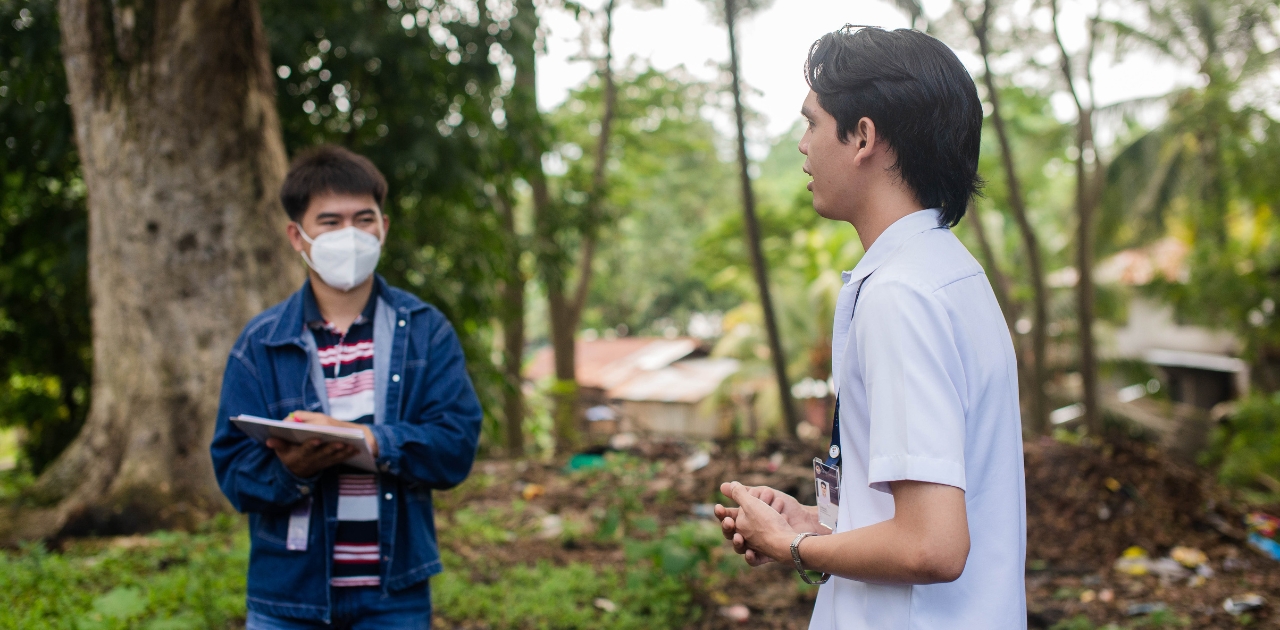
Most companies and organizations running CSR (Corporate Social Responsibility) programs are doing genuinely good work. The problem is that good work, filmed the wrong way, can look like it is more about the organization than the people it is meant to help.
Audiences expect companies to demonstrate real alignment between their values and the CSR activities they promote. When the documentation does not reflect that, the gap shows.
That gap between what your program actually does and how it comes across on video is what this guide is about.
If you are planning to documenting your organization’s CSR activities, this will help you make choices that reflect the real impact of your work rather than just the fact that it happened.
Shift the narrative center.
The most common mistake in CSR documentation is treating the organization as the main character.
Effective CSR storytelling transforms data and metrics into authentic stories that demonstrate both purpose and measurable impact. In practice, that means making a deliberate choice about whose voice opens your video, whose face carries the emotional weight, and whose words the viewer walks away remembering.
Here are some practical ways to shift that center:
1. Let the community or beneficiary speak first
Open with someone in the community and not a company representative. Their words set the context and tell the viewer immediately whose story this is.
2. Follow their journey and not your program timeline.
Your organization may have a clear rollout schedule, but the community experienced something different. The most successful impact stories tell why it matters through the eyes and voices of real peopl and not through an account of activities and milestones. Structure your video around what changed for them, not what your team accomplished.
3. Give weight not only with the after, but also to the before.
Showing only the positive outcome without context makes the video feel like a highlight reel. An honest look at the situation before your program helps viewers understand why your program mattered.
4. Use their words.
There is a difference between a community member speaking freely about their experience and a community member repeating talking points. Unscripted and verbatim interviews carry more credibility than a communications team can write for them.
Pre-production decisions
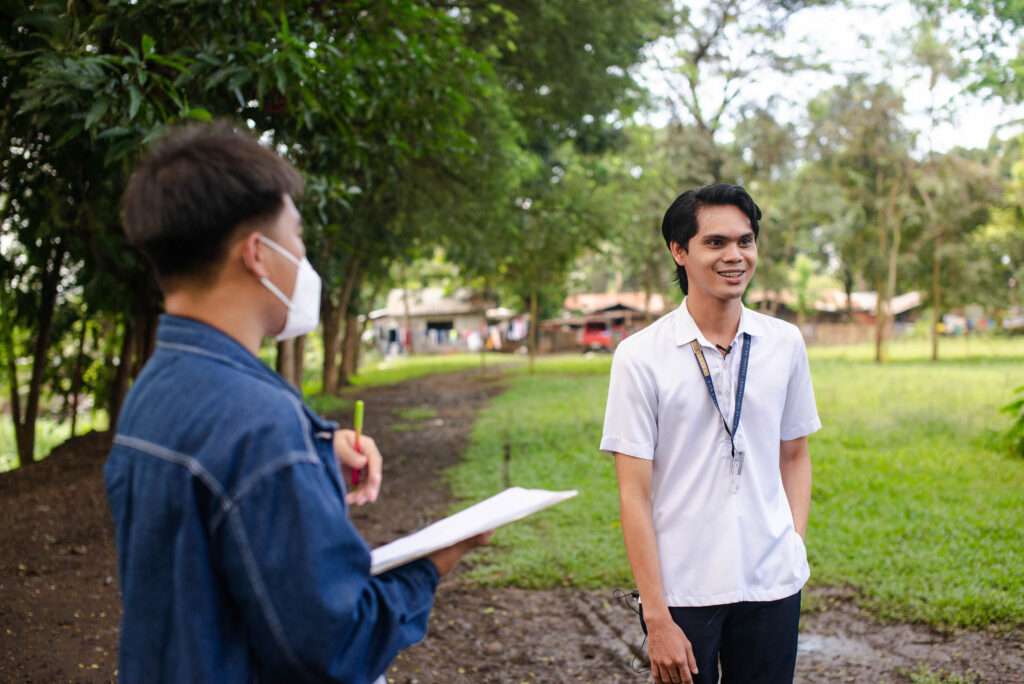
Good documentation starts before the camera is ever turned on. The decisions you make in the weeks leading up to your CSR activity will shape everything from the quality of the footage to the dignity of the people being filmed.
1. Meet the community or beneficiary before filming day.
Do not let the first time your production team meets the beneficiaries be on the day of the activity. A brief visit or coordination with community leaders beforehand builds trust, helps identify the right people to interview, and gives community members a chance to understand what being filmed involves.
2. Get informed consent properly.
Consent is not only a signature on a form, but also how the people being filmed understand the usage of the video, where it will appear, and who will see it. This is especially important when filming in rural barangays, with indigenous communities, or with minors. Take time to explain to them and give people the option to say no.
3. Brief your team and your executives.
Let your production team know the tone you are going for. If the goal is authentic community storytelling, they need to know to follow the community’s lead rather than stage moments for the camera. At the same time, brief your executives too by reminding them that this video is not about them and that the most helpful thing they can do on filming day is step back and let the community speak.
4. Plan your budget and pay your production team properly.
This is one of the most overlooked parts of CSR documentation. Organizations will spend significantly on the activity itself such as the supplies, transportation, venue, or catering, but treat documentation as an afterthought with little to no budget.
Some even expect their production team to work for free because the cause is good or agree to pay only after the event is done.
For most production companies, that is not a fair or sustainable arrangement. Your production team incurs real costs during a shoot like equipment, travel, manpower, and post-production hours. These costs do not wait until your organization processes payment. If you want quality documentation that genuinely serves your program, treat it as a non-negotiable line item in your CSR budget and not an optional add-on.
Before the shoot begins, agree with the production team you’re hiring regarding the scope, timeline, and full cost, and settle at least a portion of the payment upfront. If you are unsure what to budget for hiring a professional photographer and videographer, we’ve written a guide covers on to expect and how to plan for it. You may click this link or the one we’ve linked below.
Related Article: Hiring a Professional Photographer and Videographer in Northern Mindanao: What Are You Actually Paying For?
What to film and what to leave out.
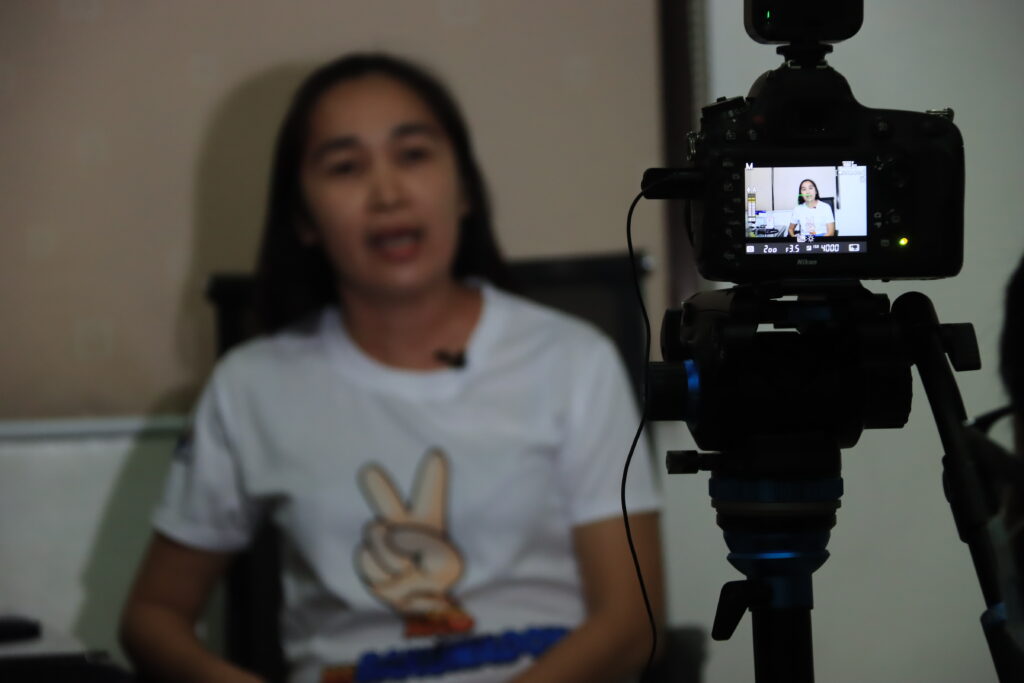
Not every moment from your CSR activity belongs in the final video. Part of authentic documentation is knowing which footage serves the story.
1. Film the work, not the ceremony.
The most meaningful footage is rarely the formal part of the program. It comprises meaniingful moments like a community member learning a new skill, children in a livelihood training watching something click, or volunteers working alongside residents rather than in front of them. These are just some of the few examples.
The strongest CSR films follow the real arc of impact: the problem the program was designed to address, the intent behind it, the initiative in action, and the specific people it has changed. Let that arc guide what you capture.
2. Prioritize candid moments over staged ones.
Staged handovers and posed group photos have their place in event documentation, but they should not be the backbone of your CSR video. Candid footage such as people in conversation, in action, in genuine reaction are what makes a CSR video feel genuine and not staged.
3. Let community members speak in their own language.
If your beneficiaries are most comfortable speaking in Bisaya, Filipino, or their local dialect, let them. Then, add subtitles upon editing. Do not ask them to repeat their story in a different language for the sake of a wider audience. The authenticity of someone speaking naturally in their own words and in their own language, is far more authentic than a polished translation delivered for the camera.
4. Capture not only the outcome, but also the context.
A video that only shows smiling faces at the end of a distribution somehow tells an incomplete story. Include footage that helps viewers understand the situation your program is responding to like the community, the environment, and the everyday reality of the people you are working with. Context is what makes the outcome meaningful.
5. Know what to leave out.
It is essential to strike the right tone and ensure that your video is sincere and does not come across as self-congratulatory. That means leaving out footage that centers the organization at the expense of the community.
It also means being careful with imagery that reduces beneficiaries to their hardship. Showing struggle is sometimes necessary for context, but lingering on poverty or distress for emotional effect crosses into exploitation. Ask whether each shot dignifies the people in it. If it does not, leave it out.
6. Film enough to have options in the edit.
Documentary-style CSR coverage requires more footage than a highlight reel. Give your production team the time and access they need to capture the activity fully. Rushing through a shoot to get the ceremonial shots and leaving early is one of the fastest ways to end up with footage that feels thin and performative.
Post-production: How you edit matters.
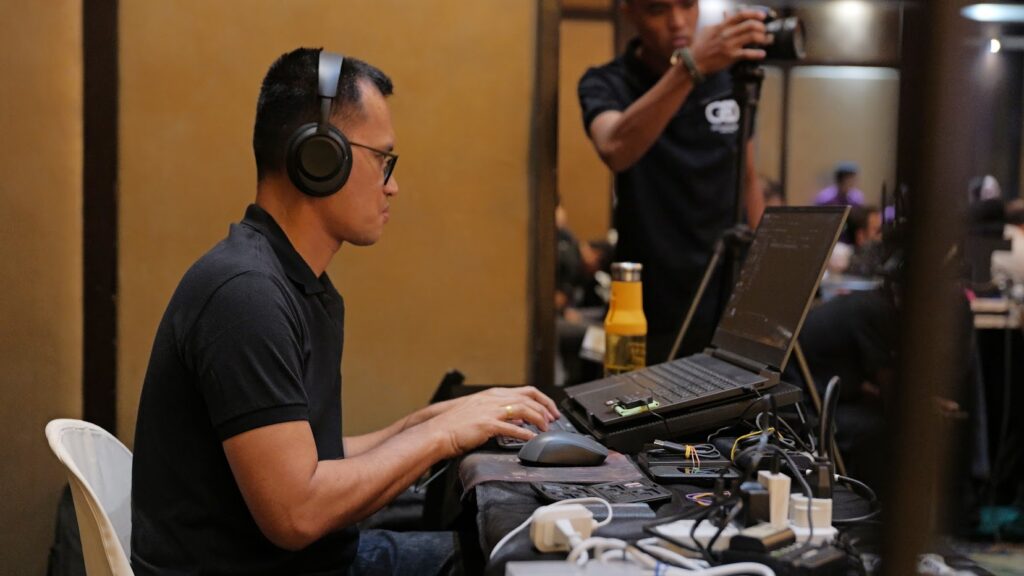
The edit is where a lot of CSR videos go wrong, even when the footage itself is good. The choices made in post-production determine whether the final video feels honest or manufactured.
1. Let the community’s voice carry the story.
If you have good interview footage, use it. Resist the urge to over-narrate with a voiceover that tells the viewer what to feel. The human transformation is what matters most and it gets buried when statistics, policy jargon, and generic slogans take over the storytelling.
Trust your subjects. If a community member said something impactful in their interview, let it breathe on screen without a narrator talking over it.
2. Be careful with music.
Background music is one of the easiest ways to manipulate emotion in a video and audiences can feel it. Choose music that supports the tone of the story without doing the emotional heavy lifting for it.
3. Structure the story around the community’s journey.
A common editing mistake is organizing the video around the organization’s program timeline rather than the community’s experience. Those are two very different stories.
CSR storytelling bridges the gap between purpose and proof by turning compliance-driven documentation into strategic communication tools that builds genuine trust and connection with its stakeholders.
4. Keep it honest in the color grade.
This may seem like a small detail, but heavy stylization in the color grade like making the footage look cinematic or dramatically lit can work against authenticity in a CSR video.
A natural and clean grade tends to feel more documentary and less produced, which is usually the tone you want for this kind of content.
5. Let outcomes speak without over-explaining.
You do not need a closing slide listing everything your organization accomplished. A well-structured CSR video lets the specific people whose lives were changed carry the conclusion with their words, their faces, and their story.
How to use your CSR video beyond social media.
Most organizations publish their CSR video only on Facebook or YouTube, then consider the job done. However, a well-produced CSR video has a much longer shelf life than a single post and getting more use out of it does not require additional production work.
1. Annual reports and sustainability reports.
CSR storytelling bridges the gap between purpose and proof and going beyond data-heavy compliance reports to show stakeholders how your organization’s values translate into measurable change.
A video embedded in or linked from your annual report gives readers a human entry point into what would otherwise be a document heavy on numbers and metrics. ]
2. Grant applications and funding proposals.
If your organization applies for grants from government agencies, international development funds, or private foundations, a CSR video is one of the strongest supporting materials you can attach.
It shows funders not just what you plan to do, but what your organization has already done and how you document it. For programs tied to DOST, TESDA, or other government-funded initiatives, video documentation also serves as evidence of program implementation.
3. Stakeholder and investor presentations.
A two to three-minute video at the start of a board presentation or stakeholder briefing does more to establish credibility and purpose than a slide deck alone. It puts a human face on the numbers and reminds decision-makers why the program exists.
4. Employee communications and internal engagement.
CSR videos are an impactful internal tool that many organizations overlook. Sharing the video with your own team especially employees who were not directly involved in the program builds organizational pride and reinforces your company’s values from the inside out.
When leveraged effectively, CSR videos can drive engagement and serve as the centerpiece of campaigns that inspire your audience and encourage them to share your message. That audience includes your own people
5. Media and press releases.
A video paired with a press release gives journalists and editors something to work with beyond quotes and photos.
Local and national media covering corporate citizenship stories are far more likely to feature your program if there is compelling a video they can reference or embed.
6. Future program planning and community feedback.
Finally, your CSR video is a record for future program coordinators, partner organizations, and community leader. They can watch it to understand what was done, how the community responded, and what the baseline looked like before the next phase of work begins.
Authentic CSR documentation starts with the right production team.
CSR programs represent your company’s real investment in communities, in people, and in the kind of organization you want to be known as. The documentation should reflect that same level of intention.
A video that centers the community, respects the people in it, and tells an honest story does more for your organization than any polished highlight reel. It builds trust with stakeholders, gives your program a lasting record, and shows the public that your CSR work is about impact.

If you are planning to document your next CSR activity and want a production team that understands how to tell these stories with care, GSD Films and Stills covers CSR documentation and community storytelling in Cagayan de Oro City, Northern Mindanao, and the Philippines.
We are a DTI and BIR-registered business serving businesses and corporate organizations.
Click the button below to get in touch. Let us talk about how we can help you.














Leave a Reply